

How Tin Ceiling Tiles Are Made

1. Materials
Historically, tin tiles were made of tin. Today they are made of stronger and more durable steel coated in tin—though the name "tin tile" continues to define this unique product.
Our steel comes from Titan Steel out of New Lenox, Illinois, which sources the best tinplate from around the world. The family-owned operation has been in business for over 50 years.
Why it matters: Using steel coated in tin delivers greater strength and durability while maintaining the traditional tin tile look. Domestic sourcing and precise sizing ensure consistent quality, reliable performance, and reduced environmental impact.
Wondering how steel stacks up against other materials?
| Feature | Tin (Steel) panels | Vinyl panels | Painted metal panels | Wood / MDF panels |
|---|---|---|---|---|
| Material strength | Rigid & durable | Flexible | Rigid | Can dent or swell |
| Pattern depth | Deep, crisp detail | Shallow detail | Moderate detail | Limited |
| Finish longevity | Long-lasting, fade-resistant | May discolor | Paint can chip | Wears over time |
| Heat & moisture | Handles heat & humidity well | Sensitive to heat | Metal is heat-safe | Sensitive to moisture |
| Overall look | Authentic, architectural | Simulated | Clean, modern | Natural, traditional |
| Best use | Statement ceilings, premium spaces | Budget projects | Modern interiors | Dry, low-impact areas |
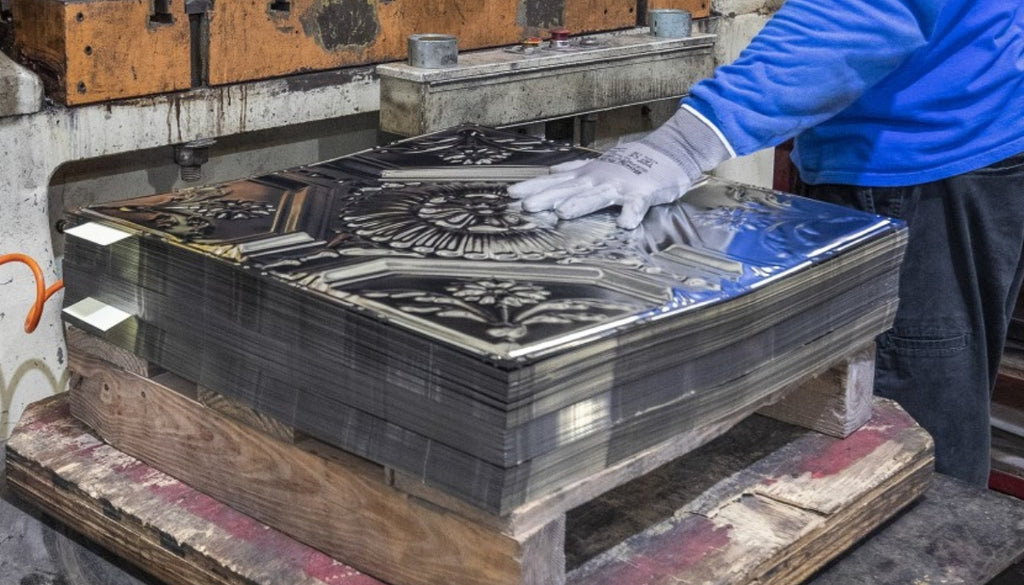
2. Stamping
After the tin is pressed, it goes on to be painted and finished. Some of the panels are set aside to be sold as "Unfinished" tin tiles. These are popular for rustic or industrial designs or they can be custom painted and finished by customers.
Why it matters: a well-stamped panel has clean definition and consistent pattern depth, which gives your ceiling that classic, architectural look (instead of a soft or “flattened” design). Stamping also helps panels maintain their shape, so they’re easier to align during installation and look more uniform once they’re up.
3. Powder Coating
After stamping, the panels are sent through one of the powder coating lines to be colored. Powder coating is a polyester resin with pigment (and occasionally pulverized metal) which is electrostatically charged with opposing currents and sprayed onto the panels. Using electricity ensures the product surface is evenly coated with long lasting adhesion.
The coated tiles are hung on a conveyer belt and run through an automatic powder booth, where spray guns are used to apply powder onto the panels. Once the color is on, they are put into a 400-450 degree oven. The powder coating melts and bakes on to the tiles providing a durable finish.
We have developed our own custom formulated colors and antiquing methods for a lineup of colors that look like authentic vintage tin tile. These are a part of our Artisan color collection.
Why it matters: powder-coated finishes are made to stand up to real life. They’re more resistant to chipping, peeling, and fading than many painted finishes, and they hold up well in spaces where durability matters—like kitchens, commercial settings, or rooms with lots of temperature changes.
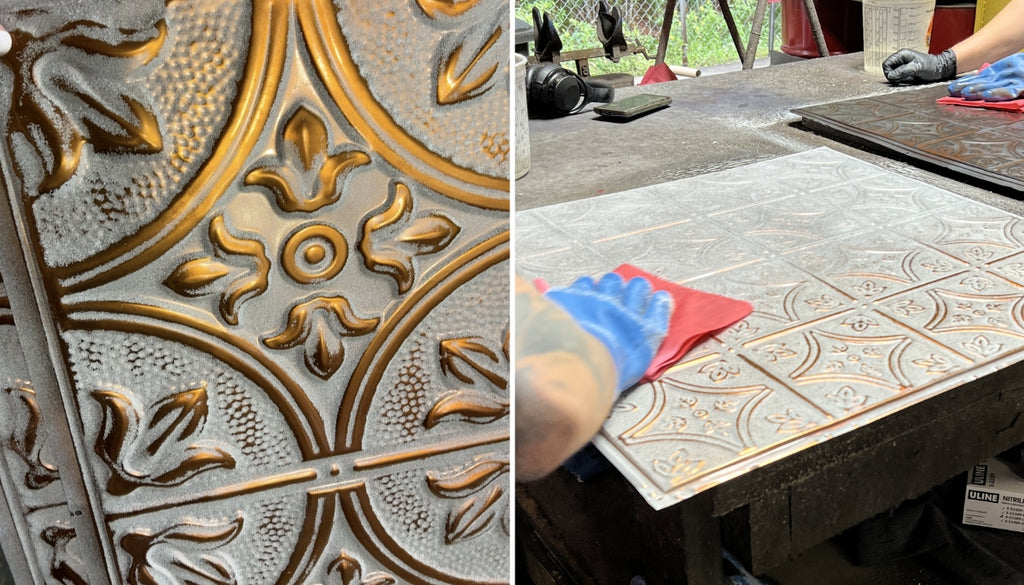
4. Artisan Colors
Our Artisan colors are hand applied and finished. We paint each panel individually then gently wipe some of the paint away to reveal the metal or powder coated surface underneath. This creates a custom look that mimics aged tin tile that might be seen in a historic building with original tin tiles.
The level of human interaction in the making of our tin ceiling tiles ensures you get a truly unique product unlike any other. Our products are the real thing; just like the tin tiles of the 19th century.
Why it matters: a dimensional finish helps the pattern read from across the room and adds warmth that flat, one-tone surfaces can’t replicate. It’s also a great way to match the character of older homes—or add instant architectural interest to newer spaces.
How we make tin ceiling tiles plays a big part in the superior quality and durability of the product. Want to know more about American Tin Ceilings and how we make tin ceiling tiles?
Common Tin Panel Manufacturing Terms Explained
Gauge
Gauge refers to the thickness of the steel used to create tin ceiling panels. Lower gauge numbers indicate thicker, more rigid metal, which helps panels maintain their shape and pattern detail over time.
Embossing
Embossing is the stamping process that presses decorative patterns into flat steel sheets, creating raised designs that give tin panels their signature depth and texture.
Powder Coating
Powder coating is a dry finishing process where color is applied electrostatically and cured under heat, resulting in a durable, even finish that resists chipping and fading.
Artisan Finish
An artisan finish is a multi-step coloring process designed to add dimension, highlights, and subtle variations that give panels a handcrafted appearance.
Steel vs. Tin
Modern “tin” ceiling tiles are typically made from steel for added strength and durability, while still maintaining the traditional look associated with historic tin ceilings.

Frequently Asked Questions About Tin Tiles
Are tin ceiling tiles actually made of tin?
Historically, yes—but most “tin” ceiling tiles today are made from steel coated in tin. This creates a stronger, more durable tile while keeping the classic look the name is known for.
Why use steel instead of solid tin?
Steel offers better strength and rigidity, which helps panels hold their shape and pattern definition over time. The tin coating supports the traditional appearance and helps protect the metal.
Where are your tin tiles made?
Our tiles are manufactured at our facility in Bradenton, Florida, using steel sourced in the U.S.
What does “stamped” or “embossed” mean?
Stamped (embossed) tiles are formed by pressing a decorative pattern into flat metal using a d high-pressure press. This creates the raised design and dimension that tin tiles are known for.
Will the pattern look consistent from tile to tile?
Yes—using dedicated molds and precision presses helps ensure consistent pattern depth and alignment from panel to panel, which is especially important for clean seams and a professional finished look.
What’s the difference between finished and unfinished tin tiles?
Finished tiles come ready to install with a completed color/finish. Unfinished tiles are left uncoated so you can paint, patina, or finish them yourself for a custom look.
Why do people choose unfinished tin tiles?
Unfinished tiles are popular for rustic or industrial styles and for projects where customers want full control over paint color, aging effects, or specialty finishes.
Can tin tiles be used in kitchens or bathrooms?
They can be a great fit for many kitchens and bathrooms, especially when properly finished and installed. For wet areas, good ventilation and a durable finish help support long-term performance.
How do you clean tin ceiling tiles?
In most cases, gentle dusting or wiping with a soft cloth is enough. For deeper cleaning, use mild soap and water and avoid abrasive cleaners that can dull or scratch the finish.
Will tin tiles rust?
Like most metals, prolonged exposure to moisture can increase the risk of corrosion—especially on cut edges or unfinished panels. Using a protective finish and keeping the space dry and well-ventilated helps reduce that risk.


